Digital Transformation in Steel Fabrication

Improving Production Visibility, Uptime, and On-Time Delivery with Smart Factory Monitoring
A mid-sized steel fabrication manufacturer—specializing in structural steel, custom assemblies, frames, and heavy-duty fabricated components—faced growing challenges in productivity, visibility, and on-time delivery. Manual tracking, machine downtime, and inconsistent workflow monitoring were hurting output and profitability.

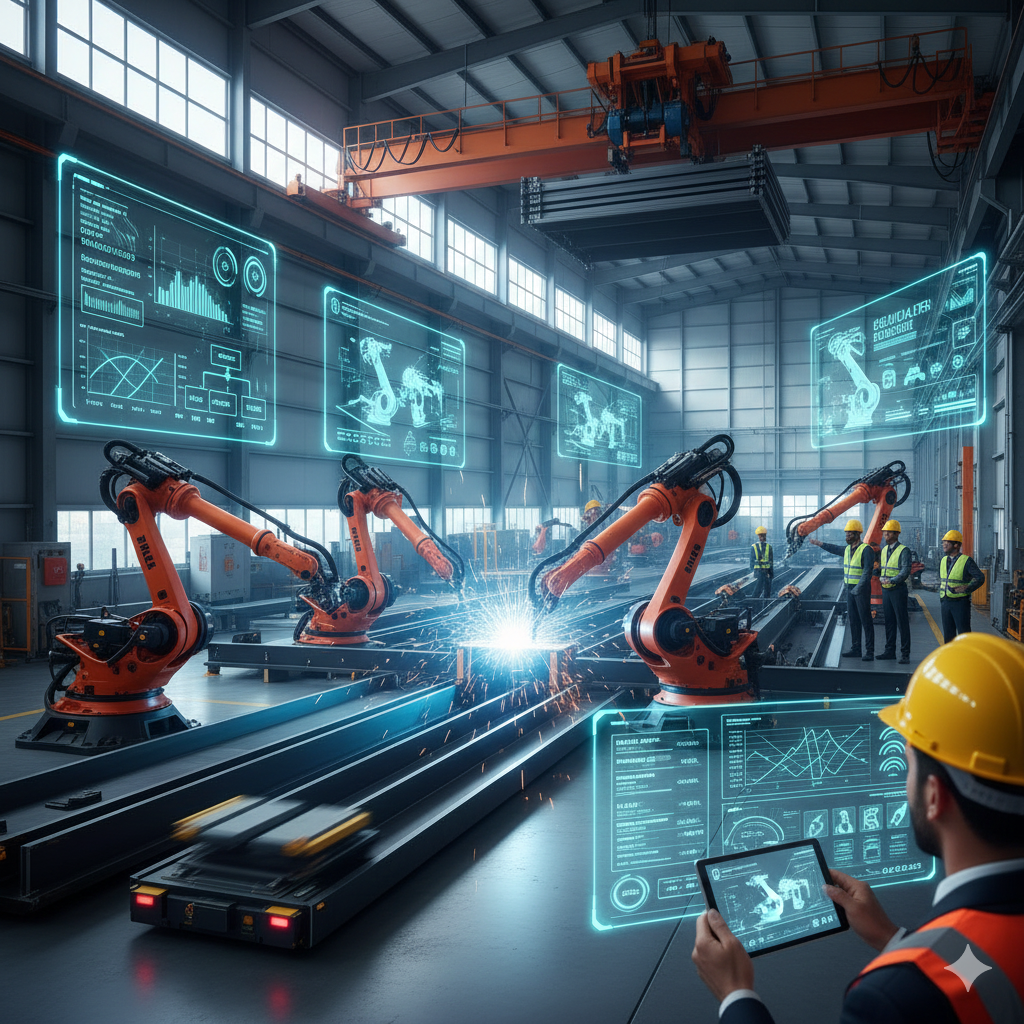
The company implemented our Real-Time Machine Monitoring & Digital Fabrication Intelligence Platform across their cutting, bending, welding, drilling, and finishing stations. Within 8 weeks, they achieved measurable improvements across all operations.
Start with One Machine Request a Demo

Steel fabrication is one of the most complex manufacturing environments due to

High dependency on multiple machine types
Laser cutting, plasma cutting, CNC bending, drilling, welding - all running in parallel with little synchronization.
Manual job tracking
Operators often maintain production logs on paper, and downtime reasons are rarely recorded accurately.
High material cost & scrap impact
Even small cutting inaccuracies cause high material wastage.
Frequent unplanned downtime
Torch misalignment, consumable wear, gas pressure issues, coolant failures, motor heating, etc.
Complex workflow routing
Jobs move between multiple stations; delays at one station affect the entire batch.
Pressure for faster delivery
Fabricators must meet tight project timelines for construction, machinery, and infrastructure customers.


Our Solution:
Smart Factory Monitoring for Steel Fabrication
We deployed a complete digital transformation stack:

Real-Time Machine Monitoring :
Connected plate-cutting machines, bending machines, drilling centers, and welding stations to capture:

- Machine ON/OFF
- Cutting cycles
- Idle time
- Downtime reasons
- Job run time
- Feed rate and cycle variations

Welding Station Monitoring :
Monitored arc-on time, job time, and operator productivity to identify:

- Under-utilized welding cells
- Weld quality variations
- Gaps between jobs
- Preventable rework

Digital Job Cards (Paperless Workflows) :
Every job card was digitized, enabling:

- Job-to-machine assignment
- Real-time job progress
- Cut-plan status tracking
- Material usage logs
- Automatic routing between stations

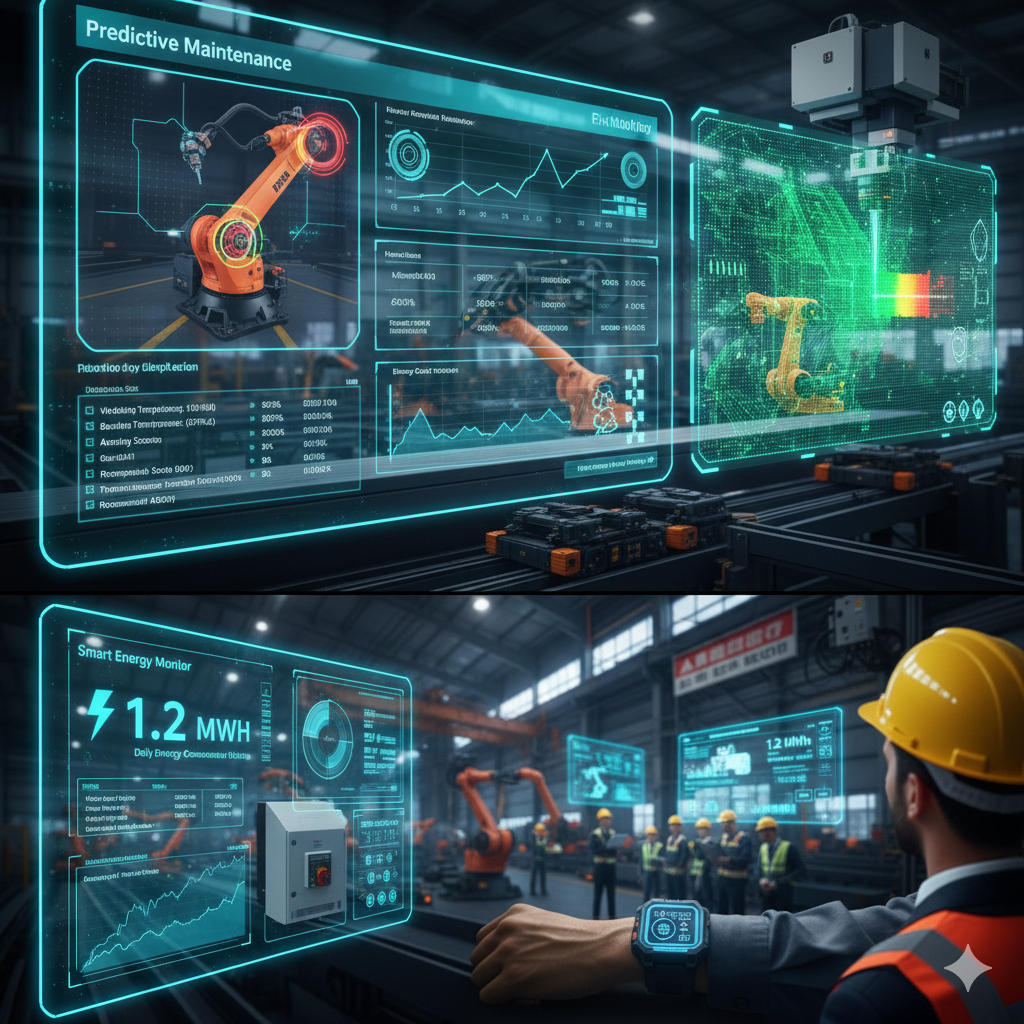
Predictive Maintenance Alerts :
Automated alerts for critical maintenance issues:

- Nozzle/tip wear
- Plasma consumable life
- Motor overload
- Compressor issues
- Overheating

Dashboard for Production, OEE & Delivery Tracking :
Visual dashboards for managers, supervisors, and operators:

- Live machine status
- OEE tracking
- Scrap monitoring
- Job delay alerts
- Delivery commitment tracker


Results After 8 Weeks

19% Increase in Machine Utilization : Idle time on cutting machines reduced due to real-time alerts and better job planning.

27% Reduction in Unplanned Downtime : Maintenance issues such as airflow fluctuations, consumable failures, and coolant issues were detected earlier.
35% Faster Job Routing Across Workstations : Digital job tracking eliminated manual searching and paper delays.
22% Improvement in Weld Productivity : Arc-on time insights helped redistribute jobs and balance workload.
Accurate Delivery Commitment : Management could track job progress and issue delivery timelines based on real-time data.
14% Reduction in Scrap & Rework : Cutting deviations, feed-rate anomalies, and tooling errors were identified early.


Key Features Used by the Steel Fabrication Plant :

Real-Time Machine Monitoring.
Welding Station Arc-Time Tracking.
Digital Job Cards / Paperless Manufacturing.
Preventive Maintenance System.
OEE Dashboard.
Real-Time Alerts (Email / SMS/WhatsApp).
Production MIS Reports.
Shift-Wise Analytics.
Operator Monitoring.


Impact on Business

Higher Profitability : Less downtime + reduced scrap = direct savings in operating cost.
Better Delivery Performance : Real-time job visibility reduced project delays significantly.
More Predictable Operations : Digital data empowered managers to plan job sequences accurately.
Continuous Productivity Culture : Operators became more accountable because real-time performance was visible.